
Key Takeaways:
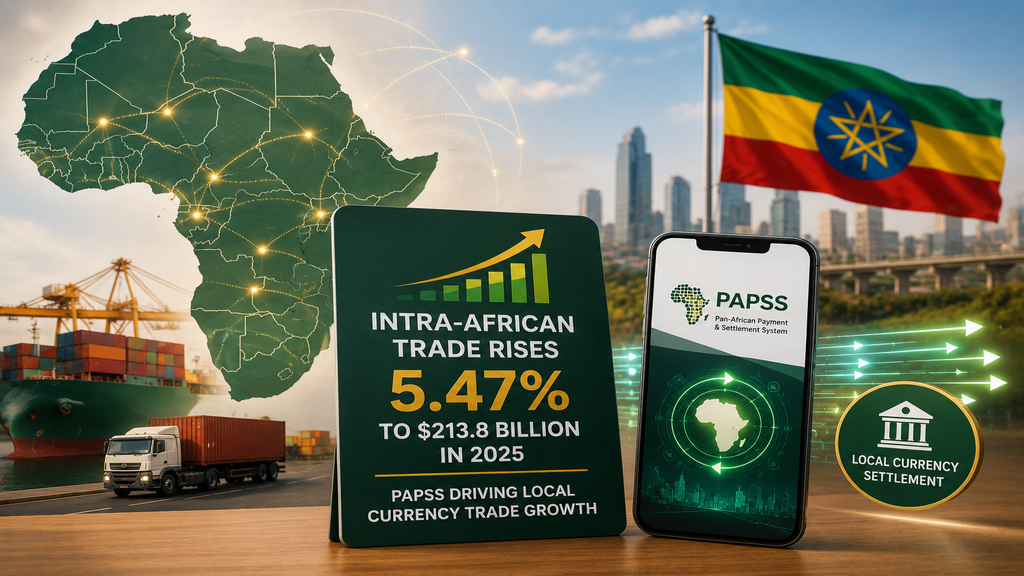
• USD 213.8bn — intra-African trade reached this level in 2025, up 5.47%.
• Afreximbank says PAPSS is expanding local-currency settlement for cross-border African trade.
• More than a dozen African central banks are now connected to PAPSS.
• Ethiopia was among countries cited for strong intra-African trade performance.
• Africa’s merchandise exports rose 6.2% to USD 685.2bn in 2025.
• Africa’s merchandise imports rose about 6% to USD 781.5bn in 2025.
• U.S. tariff changes could pressure textiles, apparel and agriculture exports, including Ethiopia.
Market Impact:
Afreximbank’s report places digital payment infrastructure at the center of Africa’s regional trade strategy. PAPSS is being positioned as a way to reduce reliance on dollar and euro settlement, lower transaction costs and insulate intra-African payments from external financial disruptions.
For Ethiopia, the report is relevant on two fronts: it cites the country among strong contributors to intra-African trade growth, while also flagging exposure to tariff pressure in export sectors such as textiles, apparel and agriculture. The message is that regional integration and local-currency settlement could become more important as external trade conditions become less predictable.
The broader African trade picture remains mixed. Intra-African trade is growing, but Africa’s merchandise trade deficit widened to USD 96.3 billion, and the continent’s share of global trade rose only marginally to 3.1%.
Key Numbers:
USD 213.8bn — Intra-African trade in 2025 — regional trade growth benchmark
5.47% — Intra-African trade growth — annual expansion rate
USD 202.7bn — Intra-African trade in 2024 — comparison base
USD 781.5bn — Africa merchandise imports in 2025 — import demand scale
USD 685.2bn — Africa merchandise exports in 2025 — export scale
USD 96.3bn — Africa merchandise trade deficit — external trade imbalance
3.1% — Africa’s global trade share — marginal increase from 2.9% in 2024
Business Signal:
Afreximbank is pushing PAPSS and local-currency settlement as strategic infrastructure for African trade resilience, with Ethiopia positioned inside both the opportunity and tariff-risk sides of the shift.