
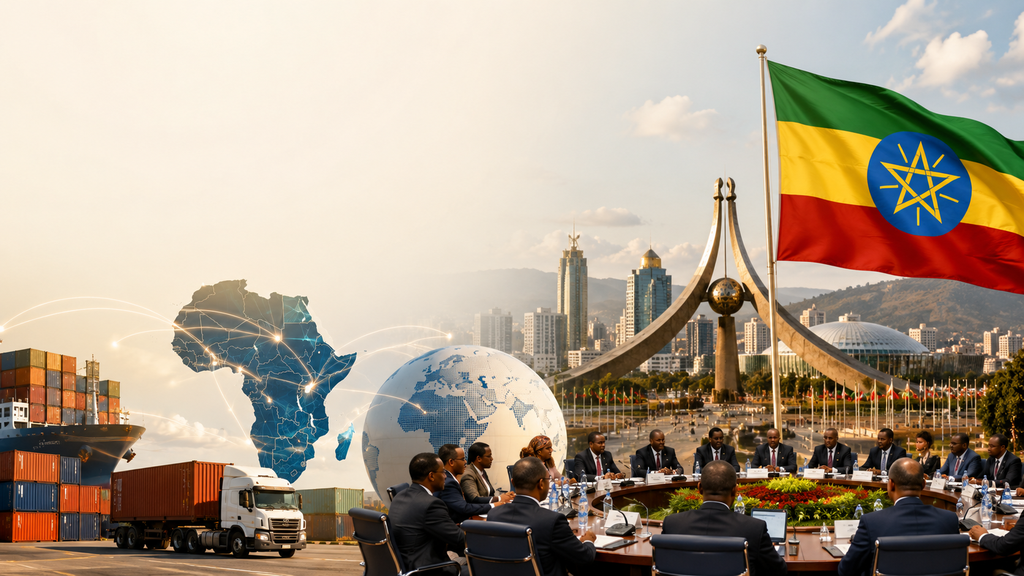
Key Takeaways:
• 15–30% trade-cost increases are linked to non-tariff barriers across regional markets.
• Ministry of Trade and Regional Integration will host ATDF 2026 in Addis Ababa.
• November 23–24 forum will bring heads of government, policymakers, industrialists and global partners.
• TradeMark Africa will co-host the forum with Ethiopia’s trade ministry.
• 52% intra-African trade growth could follow elimination of non-tariff barriers, according to UNECA.
• Two-thirds of global trade is regulated by technical measures, according to UNCTAD.
• ATDF 2026 will focus on standards harmonisation, certification and lower rejection rates for African goods.
Market Impact:
The Addis Ababa forum places Ethiopia at the centre of Africa’s trade facilitation agenda as governments seek to lower the hidden costs of cross-border commerce. The focus on standards, testing and certification is directly relevant for exporters facing market-access constraints beyond tariffs.
For Ethiopian manufacturers, exporters and logistics operators, the key issue is not only customs access but the credibility of quality infrastructure. If the forum advances practical coordination on certification and compliance, it could reduce friction for firms trying to sell into regional and international markets.
The event also signals a shift in AfCFTA implementation from political commitment toward operational bottlenecks, including quality systems, border procedures and compliance costs.
Key Numbers:
15–30% — trade-cost increase from non-tariff barriers — raises cross-border business costs
November 23–24, 2026 — ATDF 2026 dates — positions Addis Ababa as host city
52% — potential intra-African trade increase — shows impact of removing non-tariff barriers
Two-thirds — global trade regulated by technical measures — highlights compliance burden
2024 — Kigali forum adopted No Stop Border model — previous ATDF outcome
Business Signal:
Ethiopia’s hosting of ATDF 2026 signals growing attention to standards, certification and non-tariff barriers as core constraints on African trade competitiveness.