
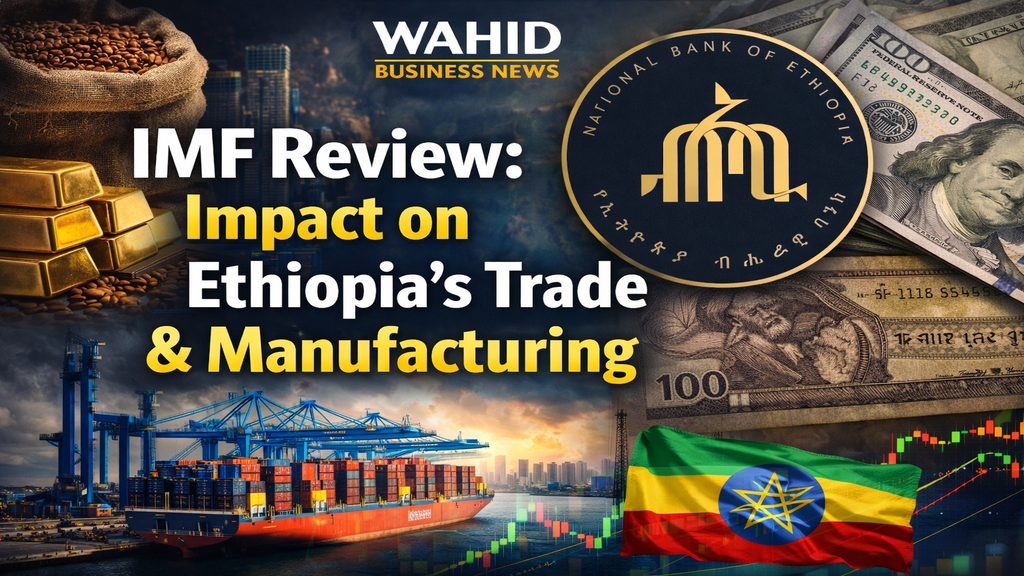
The IMF Fourth Review confirms that Ethiopia’s FX and trade reforms are materially changing how the economy engages with global markets. The shift to a market-clearing exchange rate and auction-based FX allocation removed implicit taxes on exporters and subsidies on importers, improving price transparency across trade.
Exports benefited immediately, led by gold and coffee, helping narrow the current account deficit and rebuild reserves. Improved FX availability is easing access to imported fuel, machinery, and industrial inputs, supporting manufacturing growth. Electricity expansion, mining output, and reduced FX distortions are reinforcing industrial activity.
However, import growth is expected to rise as FX constraints ease, which may widen the current account deficit moderately. Export competitiveness, diversification, and compliance with external regulations—such as EU traceability rules—remain critical for sustaining gains.
Key Numbers
(All figures taken directly from the IMF report)
IMF disbursement approved: USD 261 million under the ECF fourth review
Total IMF disbursements to date: USD 2.183 billion
Real GDP growth: 9.2% (2024/25); projected 9.3% (2025/26)
Current account deficit: 1.1% of GDP (2024/25), down from 2.9% (2023/24)
Gross international reserves: USD 4.4 billion, about 1.9 months of imports
Reserves projected: USD 5.6 billion (2025/26); USD 10.5 billion by program end
Gold exports: 39 metric tons (2024/25); projected ~30 metric tons (2025/26)
Coffee export value projected: > USD 3 billion (2025/26)
Inflation: 9.7% (Dec 2025); projected 6–7% medium term
FX intervention rule: Zero FX intervention outside auctions
If you need to read the whole IMF report, click here and download: https://wahidbusinessnews.com/media/resources/IMF_Report_on_Ethiopia-4th_Review.pdf