
Key Takeaways:
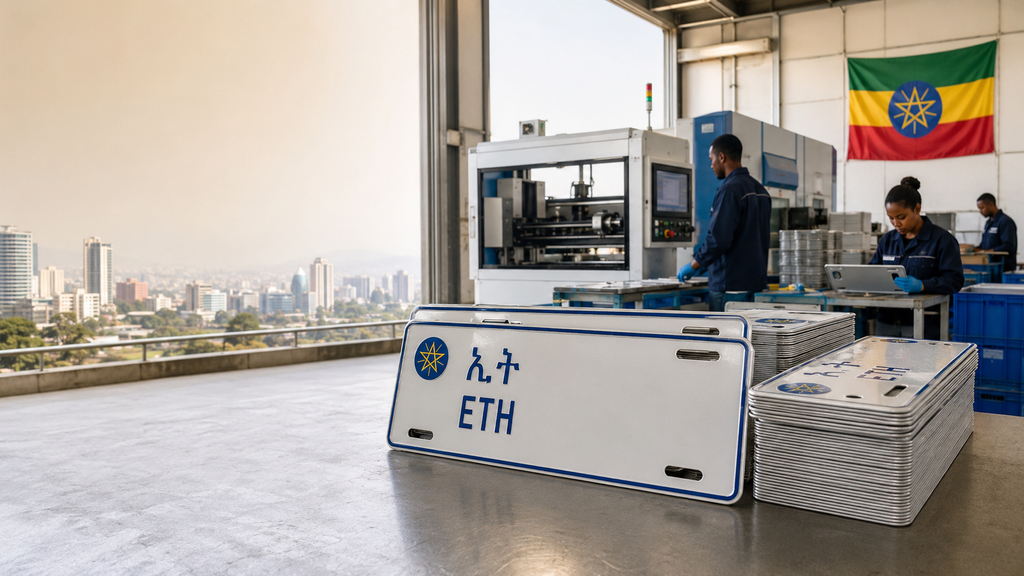
• 4 million — modern vehicle plates were manufactured in China for Ethiopia’s initial rollout.
• Public Service Transport Service Enterprise will take over plate manufacturing and distribution.
• Transfer begins after the current international supply contract is completed.
• New system replaces old plates vulnerable to damage, forgery and illegal duplication.
• Fuel-powered private, commercial, diplomatic and aid vehicles will pay Birr 56,000.
• Electric or gas vehicles receive discounts of up to 46% under the pricing structure.
• Existing Code 1, 2 and 3 vehicle transition is expected to take three to six months.
Market Impact:
Ethiopia’s vehicle plate reform is shifting from an import-backed launch to a domestically controlled production model. The Public Service Transport Service Enterprise’s mandate gives the state direct control over manufacturing and logistics after the initial Chinese supply contract ends.
The pricing structure makes the reform a cost issue for vehicle owners, transport operators and fleet managers. Higher charges for fuel-powered vehicles, combined with discounts for electric and gas-powered vehicles, turn license plate issuance into another policy lever in Ethiopia’s transport transition.
The rollout also carries operational pressure. The first phase targets newly registered vehicles through 11 Addis Ababa branches, while existing vehicles are expected to move into the new system over three to six months.
Key Numbers:
4 million — Plates manufactured in China — initial national supply base
Birr 56,000 — Fuel-powered private, commercial, diplomatic and aid vehicle plates — highest stated tariff
Birr 44,500 — Electric or gas private, commercial, diplomatic and aid vehicle plates — lower alternative-fuel tariff
Birr 28,500 — Fuel-powered cross-border freight vehicle plates — logistics-sector cost
Birr 15,200 — Electric or gas cross-border freight vehicle plates — lower freight tariff
Birr 11,700 — Fuel-powered public taxi plates — taxi-sector cost
Birr 9,400 — Electric or gas public taxi plates — lower taxi tariff
Birr 7,100 — Electric or gas buses, government vehicles, disability vehicles and Bajajs — lower public-service tariff
Birr 4,700 — Fuel-powered motorcycle plates — motorcycle tariff
Birr 3,550 — Electric or gas motorcycle plates — lowest stated tariff
Up to 46% — Discount for electric and gas-powered vehicles — policy incentive
11 branches — Addis Ababa pilot rollout points — implementation network
More than 1,000 — Registered organizations awaiting plates — early demand base
Three to six months — Expected transition period for existing Code 1, 2 and 3 vehicles — rollout timeline
June 14, 2026 — Article publication date — reporting timeline
Business Signal:
Ethiopia is using license plate reform to centralise vehicle identification, localise production and apply pricing incentives that favour electric and gas-powered transport.