
Key takeaways
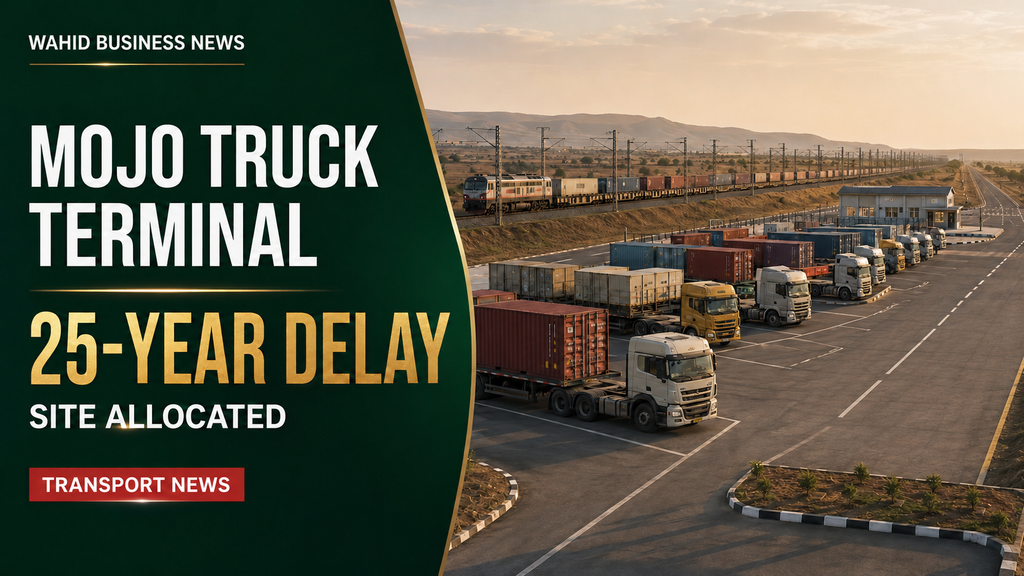
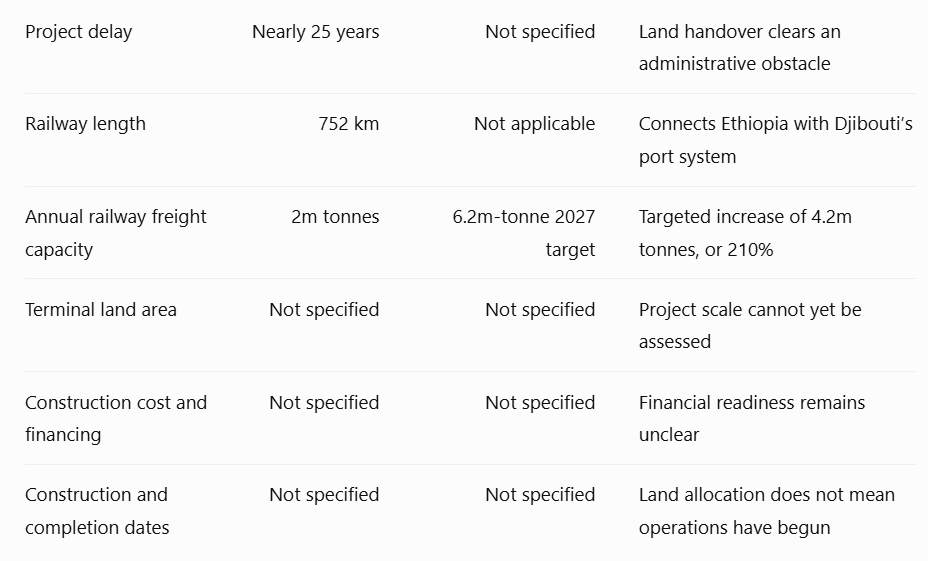
Nearly 25 years — The dedicated truck-terminal project remained unresolved before the Mojo land handover.
752 km — The electrified Ethiopia–Djibouti railway provides the corridor’s principal rail-freight connection.
6.2m tonnes — Annual railway freight capacity is targeted for 2027, up from 2m tonnes.
Not specified — Terminal size, cost, financing, truck capacity and completion date remain undisclosed.
Summary
Ethiopia has allocated land in Mojo for Djibouti to develop a dedicated heavy-vehicle parking terminal, reviving a bilateral logistics project delayed for nearly 25 years. The handover removes a longstanding administrative obstacle but represents an enabling step—the terminal has not yet been reported as financed, constructed or operational.
The ceremony brought together Ethiopian Transport and Logistics Minister Alemu Sime, Djibouti’s Infrastructure and Equipment Minister Said Nouh Hassan, Mojo’s mayor and other officials. The planned facility is intended to provide dedicated parking for Djiboutian freight trucks, reduce congestion and improve cargo movement around Mojo Dry Port.
The project complements wider corridor investments, including the 752-kilometre electrified railway. Annual railway freight capacity is targeted to rise from 2 million tonnes to 6.2 million tonnes by 2027—a planned 210% increase, not a completed expansion. Ethiopia’s Maritime Authority identifies Modjo as a central node in the country’s developing intermodal logistics system.
Why it matters
Dedicated truck parking could reduce queuing, improve vehicle turnaround and make cargo-delivery times more predictable. Importers, exporters, transporters and freight forwarders could benefit if the terminal lowers waiting and handling costs. However, measurable commercial benefits will depend on financing, construction and effective integration with Mojo Dry Port and the railway. Without disclosed capacity or timelines, the project’s likely impact cannot yet be quantified.