
Key takeaways
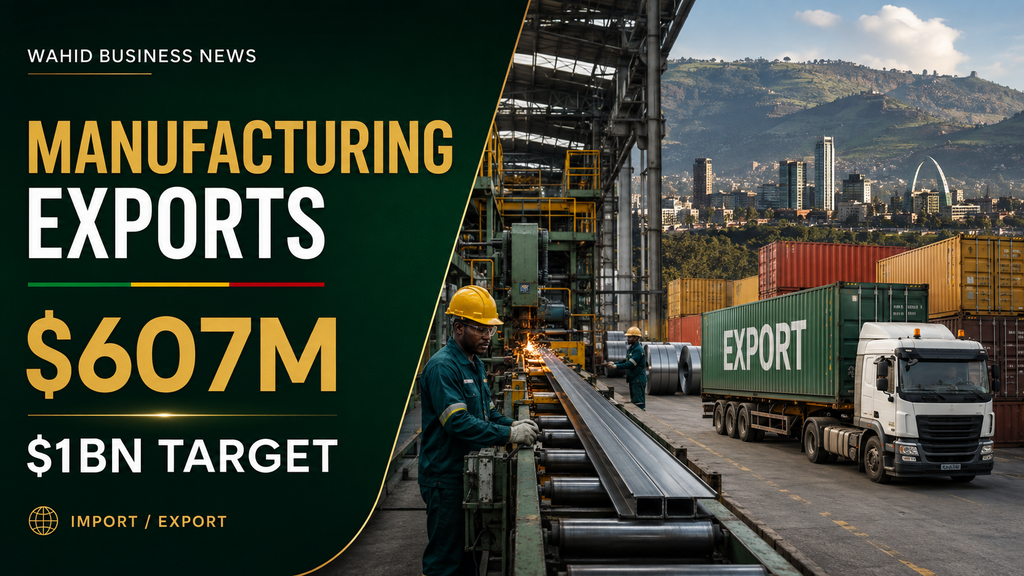
$607m — Manufacturing export revenue was reported for the 2025/26 fiscal year.
$1bn target — Government aims to raise industrial export earnings during the current fiscal year.
4,587 enterprises — Newly operational manufacturers increased from 2,787, according to the Industry Ministry.
59.3% utilization — Average manufacturing capacity reportedly rose from 47%.
Br115bn credit — Financing allocated to manufacturers increased from Br40bn.
Summary
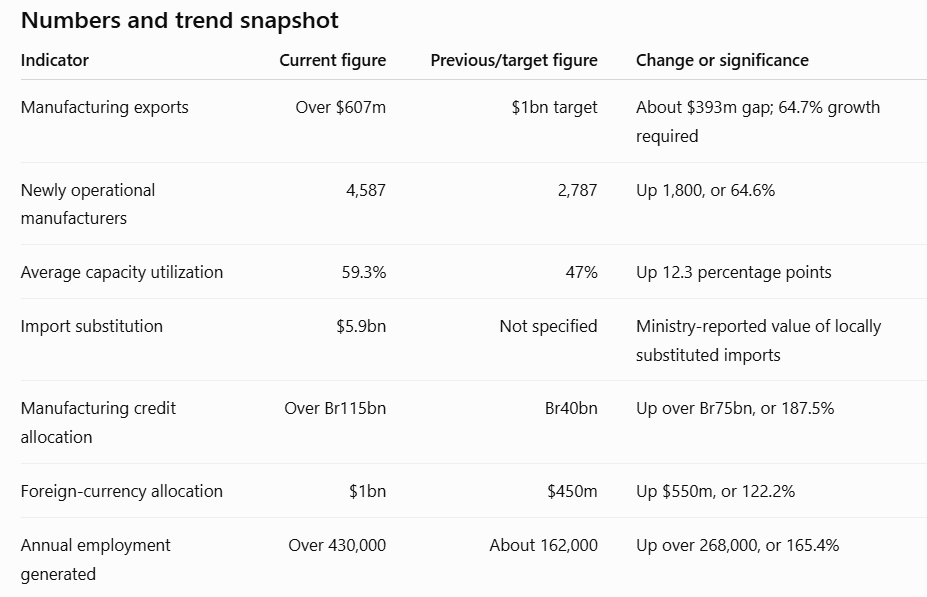
Ethiopia generated more than $607 million from manufacturing exports during the 2025/26 fiscal year, according to Ministry of Industry figures reported by BirrMetrics. The government has set a $1 billion industrial-export target for the current fiscal year, requiring approximately $393 million in additional earnings—or 64.7% growth—based on the reported figures.
Industry Minister Melaku Alebel attributed the performance to increased production and the Made in Ethiopia initiative. Newly operational manufacturing enterprises reportedly increased by 1,800 to 4,587, while average capacity utilization rose from 47% to 59.3%. The Ministry also valued goods replacing imports at $5.9 billion.
Reported support to manufacturers expanded substantially. Credit allocation exceeded Br115 billion, compared with Br40 billion previously, while foreign-currency allocation rose from $450 million to $1 billion. However, the source does not specify whether these figures represent approvals, commitments or actual disbursements.
The reported 59.3% capacity-utilization figure also requires clarification because earlier official reporting placed utilization at 66.3% in February and 67% in May. The figures may use different periods or measurement methods.
Why it matters
Reaching $1 billion would expand Ethiopia’s value-added exports and provide additional foreign-exchange revenue. Increased credit and foreign-currency access could help manufacturers finance inputs, production and export orders, provided the allocations are actually disbursed. The reported $5.9 billion in import substitution could reduce demand for foreign currency, although the calculation methodology was not disclosed. Exporters should watch whether higher factory activity translates into sustained shipments rather than production primarily for the domestic market.