
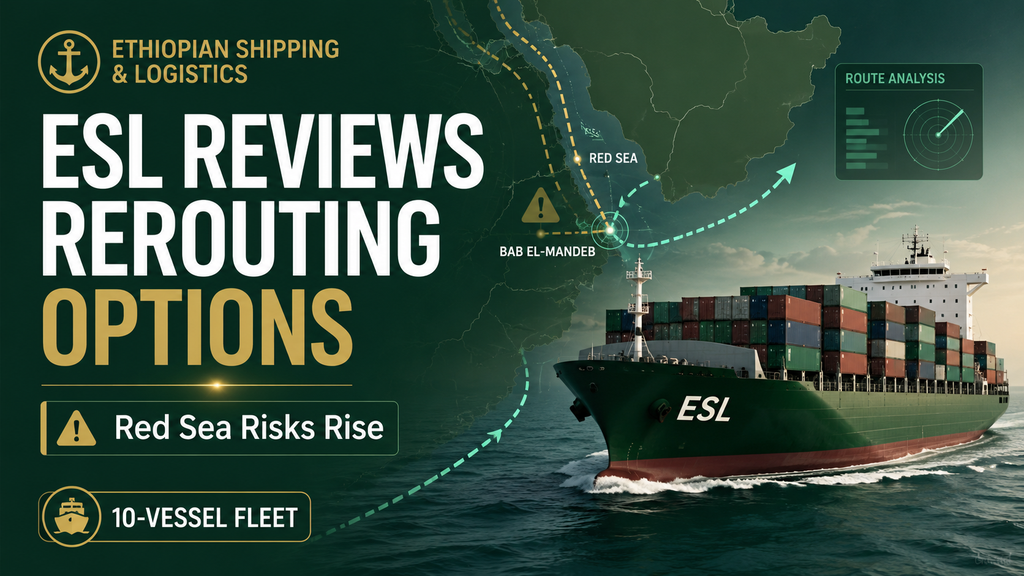
Key Takeaways:
• 10 vessels — Ethiopian Shipping and Logistics continues operating its deep-sea fleet through the region.
• ESL is assessing feeder services and longer rerouting options as security conditions evolve.
• CEO Abdulber Shemsu said decisions will depend on commercial analysis.
• ESL’s priority is maintaining uninterrupted cargo movement for Ethiopian customers.
• Ethiopian-flagged vessels previously continued calling at Khor Fakkan during heightened regional conflict.
• Ansarallah has threatened vessels linked to Israel or countries it considers supportive of Israel.
• Djibouti rejected reported plans to impose transit fees through the Bab el-Mandeb Strait.
Market Impact:
ESL’s review reflects the growing commercial cost of operating through the Red Sea and Persian Gulf during renewed security instability. Feeder services could reduce direct exposure in higher-risk waters, while longer rerouting would protect cargo continuity at the expense of additional time and operating costs.
For Ethiopian importers and exporters, the main issue is supply-chain reliability. ESL has continued sailing without interruption, but any route change could affect freight pricing, transit times and vessel availability.
The reported possibility of transit charges at Bab el-Mandeb adds another layer of uncertainty. Djibouti’s rejection of unilateral fees supports free navigation, but the situation remains unresolved and subject to further security developments.
Key Numbers:
10 vessels — ESL deep-sea fleet — regional operational exposure
2 options — Feeder services or longer rerouting — commercial response under review
1 strategic strait — Bab el-Mandeb — key maritime access point
Wednesday — Djibouti issued its rejection statement — latest policy response
Business Signal:
ESL is prioritising cargo continuity while preparing commercially viable alternatives in case Red Sea insecurity begins disrupting Ethiopian trade routes.