
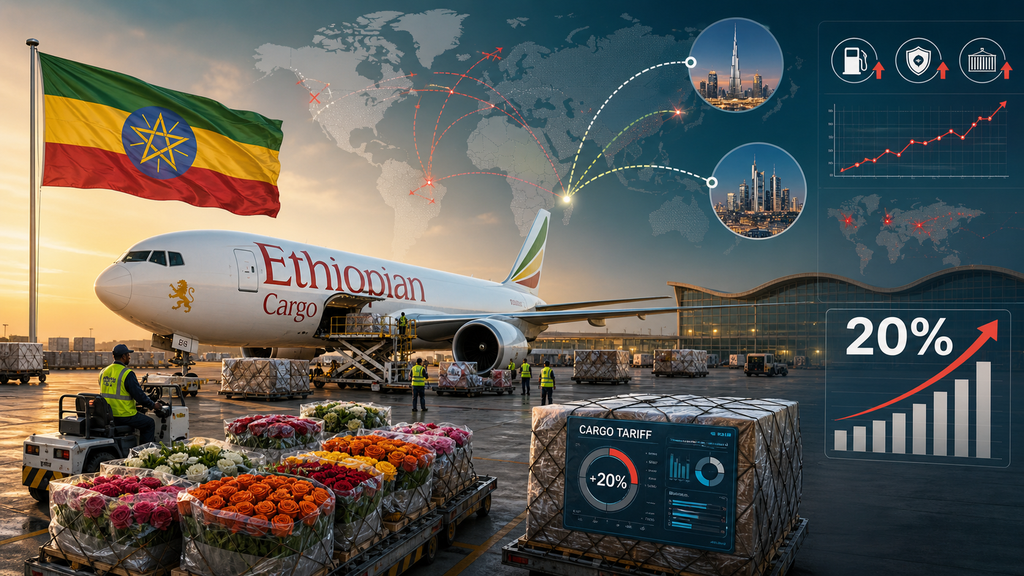
• 20% tariff increase applies to Ethiopian Airlines cargo rates for perishable exports.
• Ethiopian Airlines raised prices as fuel, insurance and operational costs increased.
• Horticulture exporters face higher air-freight costs on perishable shipments.
• Dubai International Airport and Frankfurt Airport routes are affected.
• Smaller producers face pressure from higher logistics costs and supply-chain constraints.
• Exporters reliant on air freight may see tighter margins.
• Geopolitical strain is increasing cost exposure for Ethiopia’s export logistics.
Market Impact:
The tariff increase raises the cost base for Ethiopia’s perishable-export sector, especially horticulture shipments that depend on fast air links to international markets.
For exporters, the immediate issue is margin pressure. Higher cargo costs may force companies either to absorb the increase or pass it to buyers, testing price competitiveness in destination markets.
The move also signals wider exposure in Ethiopia’s export model: logistics costs are increasingly tied to fuel, insurance and geopolitical risk, not only production efficiency.
Key Numbers:
20% — Cargo tariff increase — Raises export logistics costs
2 airports — Dubai and Frankfurt routes mentioned — Shows affected export corridors
3 cost drivers — Fuel, insurance and operations — Explains pricing pressure
Perishable exports — Cargo category affected — Hits horticulture shipments
Business Signal:
Ethiopian exporters face a sharper logistics-cost environment where geopolitical pressure is moving directly into market pricing.