
Key takeaways
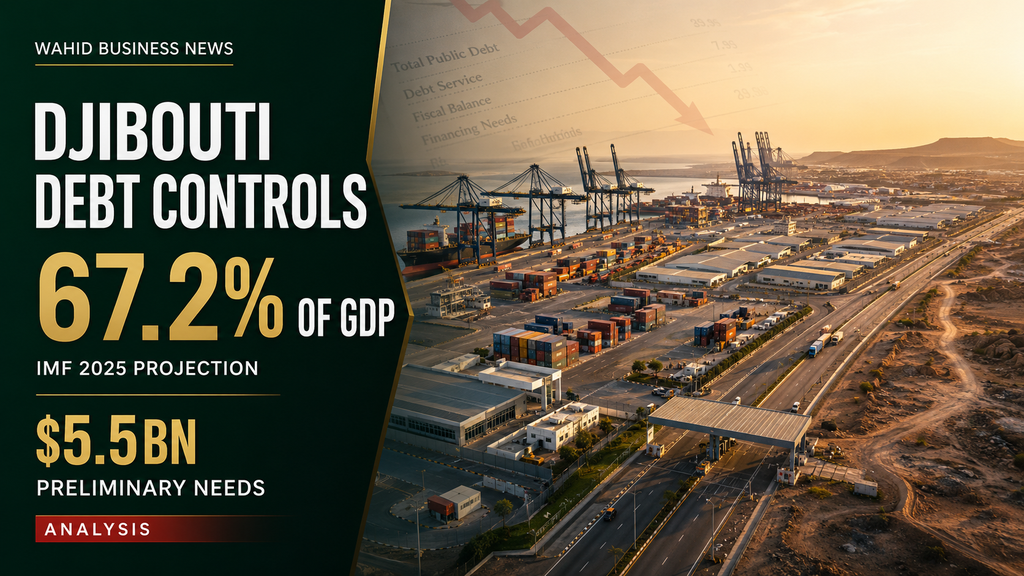
67.2% of GDP — IMF projected public and publicly guaranteed debt for 2025.
62.3% — IMF’s 2026 debt projection, falling to 38.5% by 2030 under its baseline.
$5.5bn — Combined preliminary investment needs for logistics, renewable energy and water infrastructure.
BBB, positive — IBA’s internal investment assessment, not a major agency’s sovereign credit rating.
Tighter controls — Recommendations cover debt limits, state-enterprise oversight, tax exemptions and VAT collection.
Summary
Djibouti should strengthen debt controls, improve state-owned enterprise governance and expand domestic revenue collection to sustain its infrastructure-led economy, according to an Investment Bank of Africa assessment reported by Capital Ethiopia.
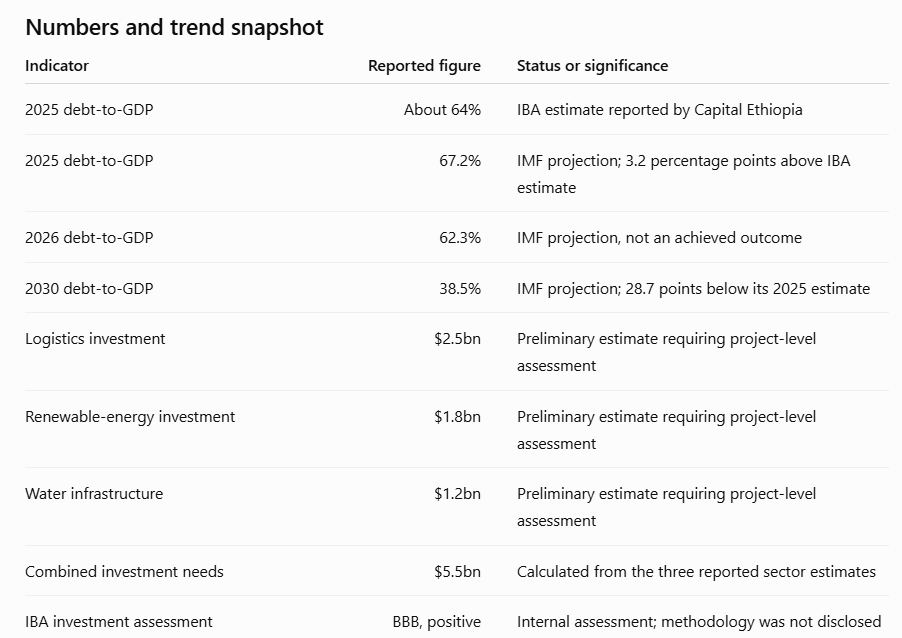
The assessment estimated public debt at approximately 64% of GDP in 2025. However, the IMF’s 2025 Article IV report projected central-government and publicly guaranteed debt at 67.2% for the same year. The difference may reflect timing or measurement scope, but the source does not provide enough information to reconcile it.
The IMF projected the debt ratio would decline to 62.3% in 2026 and 38.5% by 2030. These are conditional projections rather than confirmed outcomes. The IMF nevertheless assessed Djibouti’s public and external debt as distressed and unsustainable, largely because of outstanding arrears.
IBA estimated preliminary investment needs of $2.5 billion for logistics corridors, $1.8 billion for renewable energy and $1.2 billion for water infrastructure—a combined $5.5 billion. It recommended public-private partnerships, blended finance, development-finance guarantees and project-based funding to limit additional sovereign debt exposure.
Why it matters
Djibouti’s fiscal position directly matters to Ethiopian businesses because the country remains Ethiopia’s principal maritime and logistics gateway. Debt pressure could affect port investment, service reliability and potentially the charges paid by importers, exporters and transport operators. Stronger debt and state-enterprise controls could improve long-term corridor stability, but tighter revenue collection may increase costs for some businesses. The commercial outcome will depend on whether new infrastructure is financed through bankable projects rather than additional government-guaranteed borrowing.