
Key Takeaways:
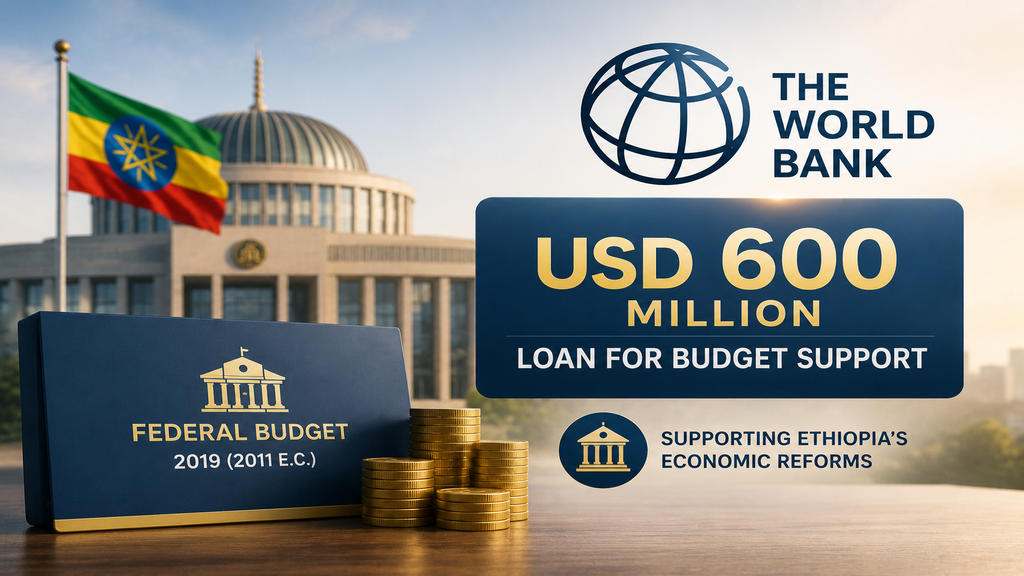
• USD 600m — Parliament approved an IDA loan agreement for direct budget support.
• USD 1.45bn — World Bank financing package supports Ethiopia’s economic reform agenda.
• USD 850m — grant financing forms the larger part of the support package.
• USD 200m — grant component comes through the World Bank’s Crisis Response Window.
• ETB 2.34tn — Ethiopia’s 2019 fiscal-year federal budget will receive external financing.
• 17% — federal budget financing is planned from foreign grants and loans.
• 31 years — loan repayment period includes a six-year grace period.
Market Impact:
The parliamentary approval gives Ethiopia access to concessional external financing that will flow directly into the federal treasury. The World Bank package supports budget execution while linking financing to reforms in public finance, trade, fiscal transparency, social protection, climate resilience, energy, infrastructure and agricultural input markets.
For the government, the loan and grant package reduces near-term pressure on domestic financing while supporting the 2019 Ethiopian fiscal-year budget. Its concessional terms — interest-free with a service charge and long repayment period — make it a lower-cost source of financing compared with shorter-term or commercial borrowing.
Key Numbers:
USD 600m — IDA concessional loan — direct budget support
USD 1.45bn — Total World Bank financing package — reform-support scale
USD 850m — Grant component — non-debt budget support
USD 200m — Crisis Response Window grant — shock-response financing
ETB 2.34tn — Federal budget — spending framework supported
ETB 193.7bn — Expected development-partner financing — budget revenue source
31 years — Repayment period — long-term concessional financing
6 years — Grace period — delayed repayment pressure
0.75% — Annual service charge — cost on disbursed funds
Up to 0.50% — Commitment charge — cost on undisbursed balances
Business Signal:
Ethiopia is using concessional budget support to finance reform-linked public spending while limiting immediate debt-service pressure on the federal budget.