
Key Takeaways:
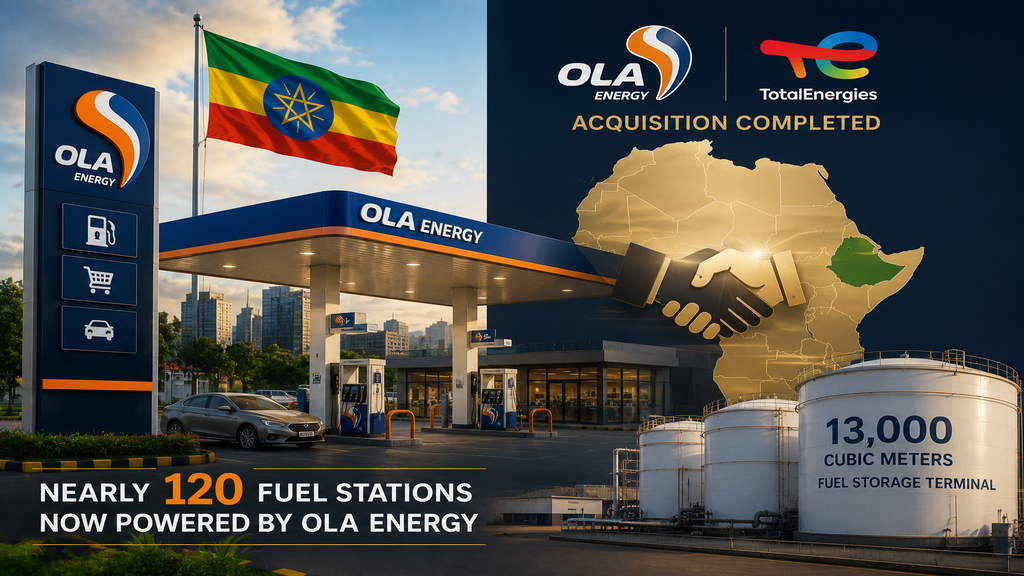
• Nearly 120 stations — OLA Energy acquired TotalEnergies’ Ethiopian retail fuel network.
• 13,000 cubic meters — fuel storage terminal ownership transfers under the agreement.
• June 30, 2026 — acquisition agreement was concluded before publication on July 1.
• OLA Energy becomes Ethiopia’s largest foreign retail fuel operator after the transaction.
• TotalEnergies ends a 76-year Ethiopian presence after beginning operations in 1950.
• OLA Energy operates over 1,300 fuel stations across 17 African countries.
• Ethiopia’s petroleum regulator introduced a market-share formula for fuel distribution efficiency.
Market Impact:
OLA Energy’s acquisition of TotalEnergies’ Ethiopian assets consolidates a major downstream fuel network under a Libyan government-backed pan-African operator. The transaction transfers nearly 120 stations and a 13,000-cubic-meter terminal, strengthening OLA Energy’s position in Ethiopia’s retail fuel market.
For Ethiopia’s fuel sector, the deal lands during regulatory reform aimed at improving fuel allocation and distribution efficiency. The Ethiopian Petroleum and Energy Authority’s new market-share formula adds a policy backdrop to a transaction that could reshape competition among foreign fuel retailers.
The sale also marks TotalEnergies’ exit after nearly eight decades in Ethiopia. For OLA Energy, the acquisition extends a continental growth strategy built through retail-network purchases from global energy companies.
Key Numbers:
Nearly 120 stations — TotalEnergies assets acquired — retail-network scale
13,000 cubic meters — Fuel storage terminal — downstream logistics asset
76 years — TotalEnergies presence in Ethiopia — market exit milestone
1950 — TotalEnergies began operations — historical entry date
1,300+ stations — OLA Energy African network — buyer scale
17 countries — OLA Energy presence — regional operating footprint
€34.5m — OLA Energy reported 2024 net profit — financial performance marker
Business Signal:
OLA Energy’s acquisition signals consolidation in Ethiopia’s downstream fuel market as foreign operators reposition around regulated distribution, storage capacity and African retail-network scale.