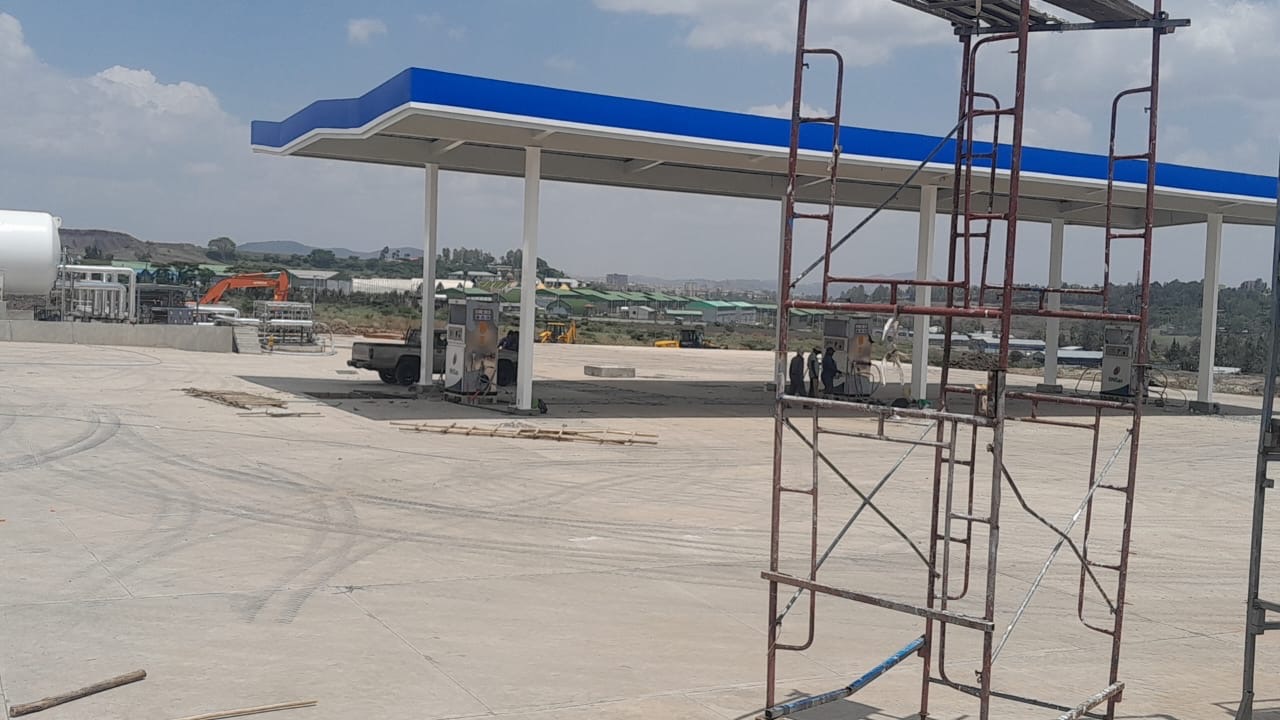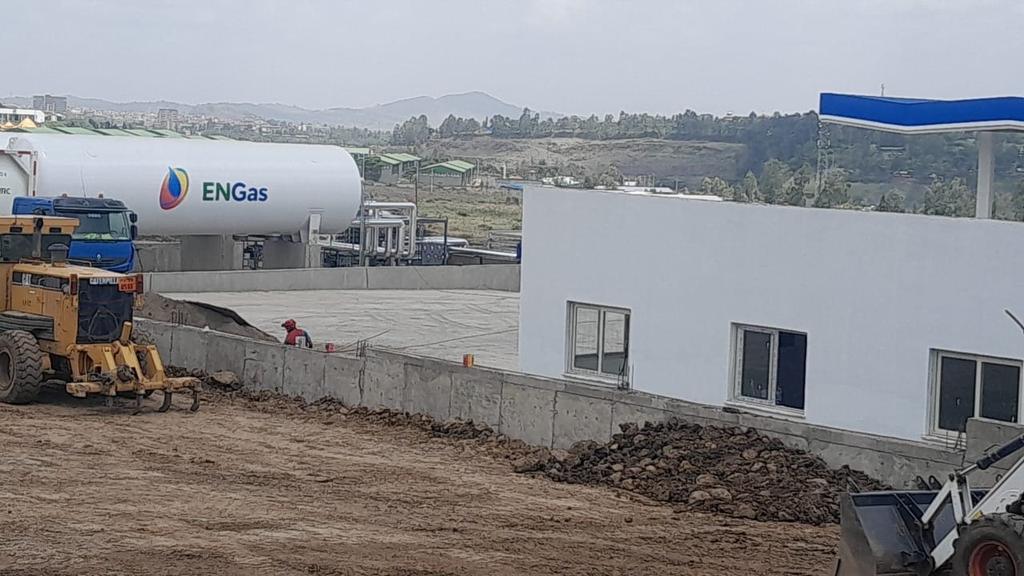
ADDIS ABABA — Construction of a major LNG/CNG fueling station in Kaliti has reached an advanced stage, as Ethiopia accelerates efforts to build alternative fuel infrastructure for its growing gas-powered transport sector.
Wahid Business News observed ongoing construction activity at the ENGas-branded facility, where large gas storage tanks, fueling dispensers, canopy structures and vehicle service bays have already been installed. Workers and heavy machinery remained active on-site as finishing works continued across the compound.
The project forms part of a wider LNG distribution expansion previously reported by Wahid Business News, which identified Kaliti, Adama and Dire Dawa among the first locations selected for Ethiopia’s pilot LNG station rollout.
Under the earlier expansion plan, the initial phase targeted annual LNG supply capacity of 111 million litres. A second phase aims to raise national LNG distribution capacity to 1.33 billion litres annually through additional fueling stations and infrastructure development.
The Kaliti facility also emerges alongside Addis Ababa’s Br1.4 billion programme to convert 1,200 public buses to gas-powered systems, reflecting a broader policy shift toward LNG, CNG and alternative transport energy systems.
The expansion of fueling infrastructure around key logistics and industrial corridors could support wider adoption of gas-powered commercial fleets, particularly in public transport, freight and heavy-duty vehicle operations.