
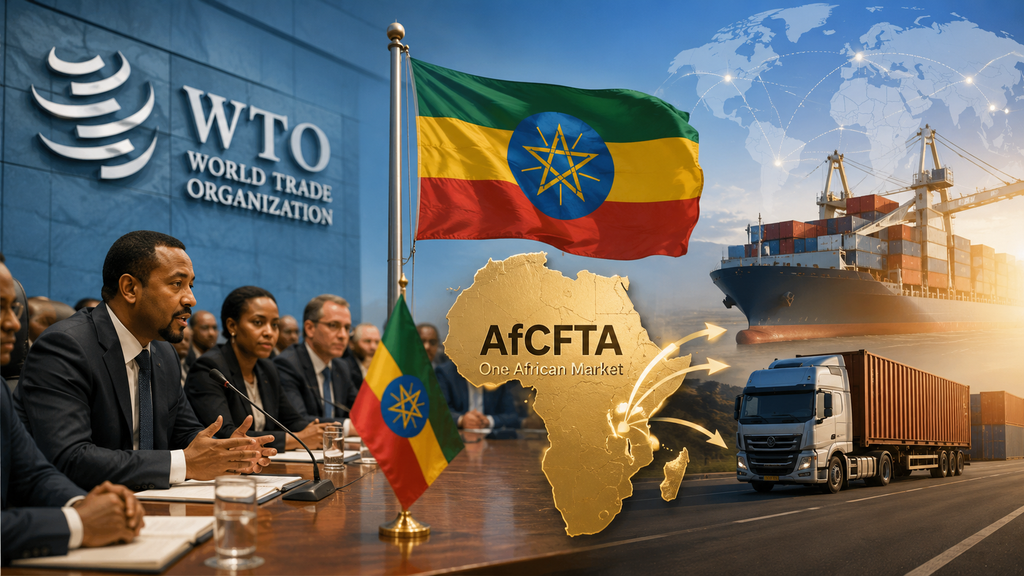
Key Takeaways:
• Three WTO Working Party meetings were held over the past year, according to Trade Minister Kassahun Gofe.
• Finance and Trade ministries briefed Development Partners Group members on WTO accession and AfCFTA implementation.
• Ethiopia launched AfCFTA shipments in October 2025 to Kenya, Somalia and South Africa.
• World Bank, IMF, UNDP and German, Korean and Japanese agencies attended the meeting.
• Ethiopia may roll back its fuel-powered vehicle import ban as part of WTO accession efforts.
• Fund and Project Coordination Office was established inside the Trade Ministry for trade initiative coordination.
• Germany highlighted support for customs and SMEs, while UNCTAD noted manufacturing capacity efforts.
Market Impact:
Ethiopia’s WTO accession process remains a policy priority, with officials reporting increased activity after more than two decades of negotiations. The meeting also linked trade reform to AfCFTA implementation, where Ethiopia has begun shipments to selected African markets.
For importers, manufacturers and logistics operators, the most immediate signal is regulatory. Officials have indicated possible changes to the fuel-powered vehicle import ban as part of WTO accession efforts, while also planning measures to discourage non-electric vehicle imports.
The creation of the Fund and Project Coordination Office points to a more centralised trade reform architecture. Its role in coordinating partner funding with national priorities could affect customs, SME support and manufacturing programmes.
Key Numbers:
3 — WTO Working Party meetings over the past year — accession process activity
Over 20 years — WTO accession process duration — long-running trade negotiation
October 2025 — AfCFTA shipments launched — trade channel activation date
3 countries — Kenya, Somalia and South Africa — AfCFTA shipment destinations
4 major partner groups — World Bank, IMF, UNDP and development agencies — reform support base
Business Signal:
Ethiopia is aligning WTO accession, AfCFTA trade channels and institutional coordination to advance trade reform, with implications for import rules, customs support and manufacturing policy.