
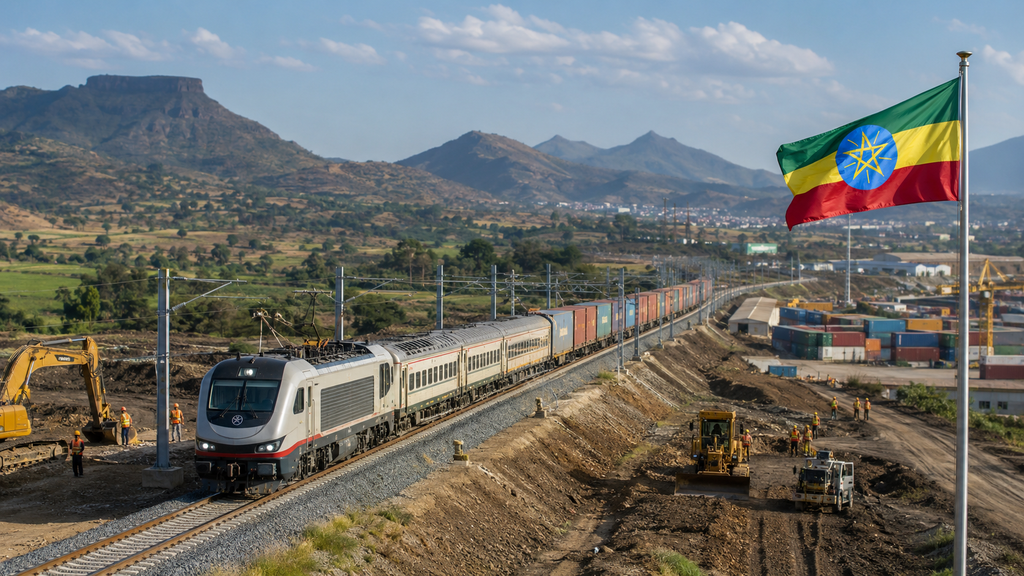
Key Takeaways:
• $1.7bn Awash–Kombolcha–Hara Gebeya railway has resumed after years of suspension.
• Ethiopian Railways Corporation is restarting repair and reconstruction works along the 392km corridor.
• Project completion is now expected within two years, according to Ethiopian News Agency comments.
• Railway links Amhara commercial centres to the Addis Ababa–Djibouti trade corridor through Awash.
• Turk Exim Bank financed the EPC contract awarded to Yapı Merkezi in 2015.
• Addis Ababa–Djibouti corridor carries more than 95% of Ethiopia’s import-export trade by volume.
• Arbitration, damage costs and contractor arrangements remain unresolved risks for project completion.
Market Impact:
The relaunch could strengthen northern Ethiopia’s access to the country’s main trade gateway by feeding freight into the Addis Ababa–Djibouti railway corridor. For businesses around Kombolcha, the line offers a potential shift from road-dependent logistics toward electrified rail connectivity.
The project also carries financing and execution risks. Damage assessment, rehabilitation scope and contractor arrangements remain sensitive, while the arbitration between Ethiopian Railways Corporation and Yapı Merkezi continues to shape the project’s financial exposure.
Kombolcha’s industrial and logistics facilities make the railway commercially important beyond passenger movement. Completion would support industrial activity, dry port-linked operations and regional trade recovery.
Key Numbers:
$1.7bn — EPC contract value — scale of railway investment exposure
392km — railway length — connects Awash, Kombolcha and Hara Gebeya
2 years — expected completion period — new delivery timeline
120km/h — designed operating speed — electrified rail performance target
95%+ — Ethiopia’s import-export trade volume through Addis Ababa–Djibouti corridor
$979.9m — Yapı Merkezi claim — arbitration exposure
$750m — rejected claim amount — reduced ERC liability risk
Business Signal:
Ethiopia is reviving a strategic northern logistics corridor, but completion depends on rehabilitation costs, contractor settlement and execution discipline.