
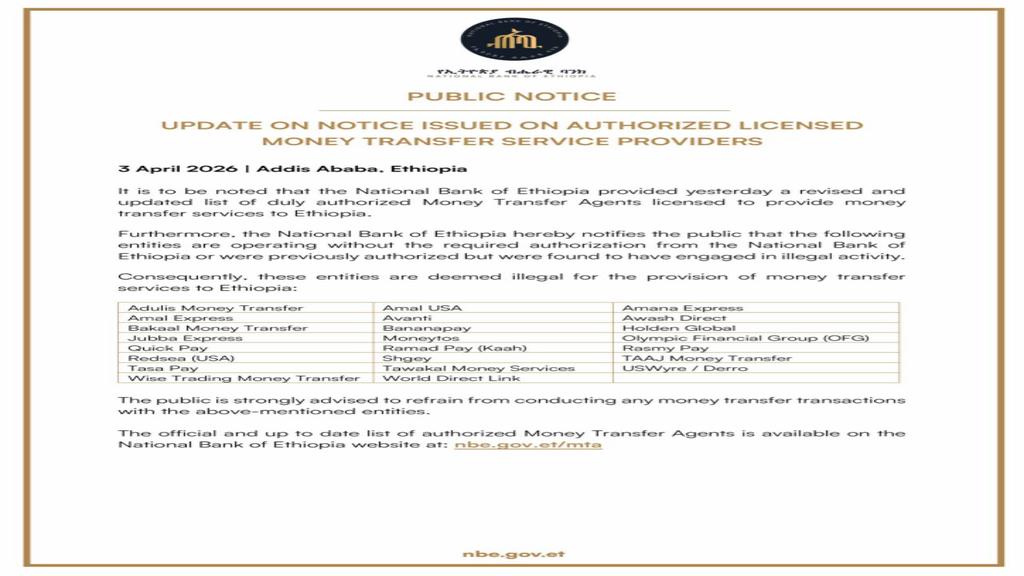
Addis Ababa, April 3, 2026 — The National Bank of Ethiopia (NBE) has intensified its regulatory clampdown on cross-border money transfers, publishing an updated list of licensed operators while naming more than a dozen entities deemed to be operating without authorization or engaging in illicit activities.
In a public notice issued Friday, the central bank warned that the listed firms are prohibited from facilitating remittance services into Ethiopia, either due to lack of licensing or violations of regulatory requirements. The move follows a broader effort by the NBE to formalize foreign exchange inflows and curb leakages through informal or non-compliant channels.
Among those flagged are international and digital transfer operators, including Amal Express, Awash Direct, Quick Pay, TAAJ Money Transfer, and USWyre, alongside several others with operations spanning North America and global remittance corridors.
The central bank urged the public to avoid any transactions with the blacklisted entities and directed users to its official website for an updated registry of authorized providers.
The intervention comes at a time when Ethiopia is under sustained pressure to improve foreign currency liquidity. Remittances remain a key pillar of FX inflows, but authorities have long struggled with parallel-market activity and unregulated transfer networks that divert hard currency away from the formal banking system.
By tightening enforcement and clarifying the legal status of operators, the NBE appears to be reinforcing its broader monetary and exchange rate reform agenda, which increasingly prioritizes transparency, compliance, and the consolidation of foreign exchange flows within the رسمی financial system.