
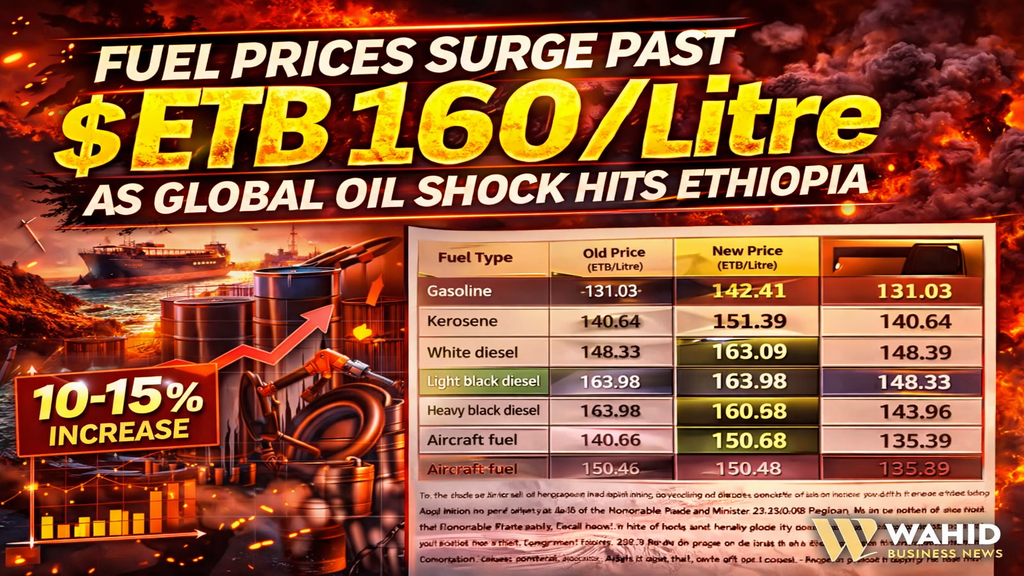
Ethiopia has implemented a fresh round of fuel price increases in Addis Ababa, with retail rates rising across all major categories as global oil market disruptions continue to feed into domestic costs.
According to an official notice from the Ministry of Trade and Regional Integration, gasoline is now priced at ETB 142.41 per litre, representing an estimated 7–10% increase from the previous level reported on WahidBusinessNews. Kerosene has risen to ETB 151.39, also up by roughly 8–11%.
Diesel prices recorded the most pronounced increases. White diesel now stands at ETB 163.09, while light black diesel has reached ETB 163.98, and heavy black diesel ETB 160.68 per litre. These reflect increases in the range of 10–15%, pushing diesel prices firmly above the ETB 160 threshold for the first time. Aircraft fuel has been set at ETB 150.48, marking a similar upward adjustment of approximately 8–12%.
The latest revision follows earlier price adjustments and aligns with a sharp escalation in international oil markets, where prices have surged by as much as threefold amid supply disruptions around the Strait of Hormuz. Ethiopia, which imports nearly all of its fuel consumption, remains highly exposed to such external shocks.
Compared with previous domestic pricing, the current increase represents one of the steepest short-term adjustments, particularly for diesel, which plays a central role in freight, construction, and industrial operations. The cumulative effect of successive hikes is now translating into significantly higher operating costs across logistics and supply chains.
For businesses, the new pricing structure is expected to accelerate cost pass-through into transport tariffs and goods distribution, adding pressure to inflation. At the same time, the higher import bill will intensify demand for foreign exchange, further tightening liquidity in Ethiopia’s already constrained forex market.
The adjustment underscores the structural linkage between global energy volatility and Ethiopia’s domestic price environment, as policymakers continue to balance supply security with rising fiscal and external pressures.