
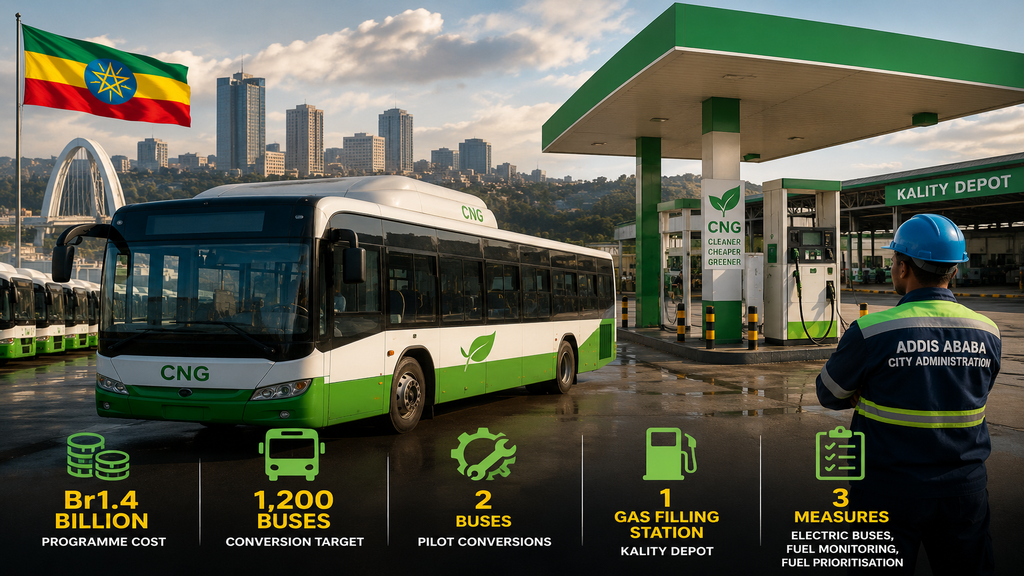
• Br1.4 billion programme targets conversion of 1,200 Addis Ababa public buses to gas-powered engines.
• Addis Ababa City Administration launched the programme to expand alternative energy transport systems.
• Two pilot buses have already been converted under the city’s gas transition plan.
• A gas filling station has been built at Kality Depot to support the conversion programme.
• Authorities say the shift aims to reduce fuel imports for public transport operations.
• The plan runs alongside electric buses, digital fuel monitoring and fuel prioritisation measures.
• Rising global energy costs are pushing Addis Ababa toward alternative transport energy systems.
Market Impact:
Addis Ababa’s bus conversion programme signals a shift in urban transport procurement from fuel dependence toward alternative energy infrastructure. The immediate business impact lies in fleet retrofitting, depot-level gas supply and transport system cost management.
For logistics, fuel supply and public transport operators, the Kality Depot filling station shows that infrastructure is being built alongside vehicle conversion. The programme also places gas conversion within a broader policy mix that includes electric buses and digital fuel monitoring.
Key Numbers:
Br1.4 billion — Programme cost — Capital allocation for gas bus conversion
1,200 buses — Conversion target — Public transport fleet transition scale
2 buses — Pilot conversions — Initial implementation milestone
1 gas filling station — Kality Depot — Fuel infrastructure support point
3 measures — Electric buses, fuel monitoring, fuel prioritisation — Wider transport energy package
Business Signal:
Addis Ababa is moving public transport investment toward alternative energy systems to reduce fuel-import exposure and manage operating pressure.