
Key Takeaways
- Br100 billion is budgeted for Ethiopia’s fertiliser subsidy in 2026/27, up from Br84 billion the previous season.
- Bayer plans to test a wheat variety that draws nitrogen from soil bacteria.
- Ethiopia will host the first African trials, according to Bayer chief executive Bill Anderson.
- Anderson expects comparable yields with one-third to one-half less fertiliser. Local trials will test that estimate.
- Ethiopia imported 1.337 million tonnes of fertiliser in 2024/25, costing $1.047 billion.
- The Agriculture Ministry reports available supply of 19.1 million quintals this season, including carryover stocks.
- For 2027/28, the ministry has contracted 20.9 million quintals against a procurement plan of 22.9 million.
Market Impact
The trial addresses a cost borne by farmers and the federal budget. In 2025/26 the subsidy amounted to Br4,972 for each quintal sold to farmers, according to the Agriculture Ministry.
The commercial question is how much fertiliser growers could save per hectare while maintaining yield under Ethiopian conditions. That measurement will determine what the variety could mean for purchasing needs.
Key Numbers
- Br100 billion — current subsidy budget
- $1.047 billion — 2024/25 fertiliser import bill
- One-third to one-half — Bayer CEO’s estimate of possible input savings
Business Signal
Farmers and fertiliser buyers need local yield and input-use results before they can estimate savings.
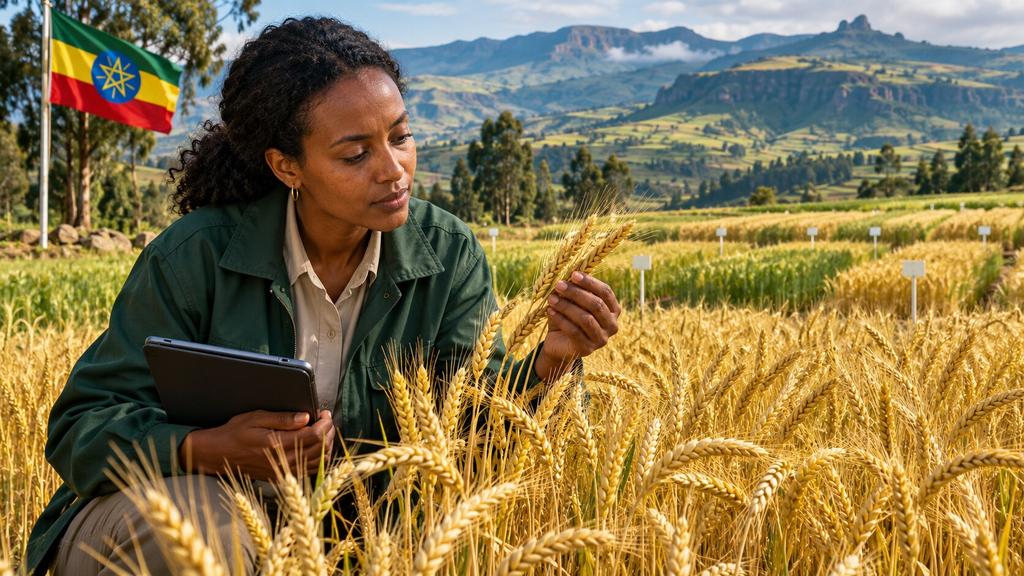
AI-generated editorial illustration.